How do the authors establish their argument that cellphilms are an educational technology?
TPACK shows the different components that go into the making of a cellphilm.
Why do the authors argue that cellphilms support teachers’ navigation of complex issues?
The authors argue that cellphilms support teachers’ navigation of complex issues, because cellphilms use the TPACK framework, which helps the teacher to his/her knowledge, technology, and teaching of socially, politically, and emotionally charged topics.
What are the various domains of TPACK?
TPACK consists of seven main components, which are the three primary domains, three hybrid domains, and the convergent TPACK domain in the center.
The three primary domains are:
Content Knowledge (CK)
Pedagogical Knowledge (PK)
Technological Knowledge (TK)
The three hybrid domains are:
Technological Content Knowledge (TCK)
Technological Pedagogical Knowledge (TPK)
Pedagogical Content Knowledge (PCK)
The seventh domain, TPACK combines all of the six domains above.
Google docs is an open source application that allows the user to create documents and spreadsheets which can be edited online. What is great about Google docs is that whatever that the user creates under their google account can be accessed at any computer or a web browser. Google docs also allows the user to share their documents with others which can then be edited by others.
____________________________________
2. GIMP
Gimp is an open source that allows the user to manipulate images. From recreational to a professional use, GIMP is a useful tool when it comes to editing photos and images.
_____________________________________
3. Quizlet
Quizlet is a learning tool that allows students to study more effectively using flashcards, games and learning tools. It allows students to quiz themselves with the materials they are learning in class, and it also allows teachers to make learning more engaging and fun for students. Quizlet helps students retain information.
_____________________________________
4. Scratch
Scratch, as a project of the Lifelong Kindergarten Group at the MIT Media Lab, is an open source programming language and online community where the user can create their own interactive stories, games, and animations. Scratch is designed for young people to learn to think creatively, reason systematically, and work collaboratively.
For our group’s digital media project, we decided to use the open source software Scratch to create an educational video that would teach students about the different animal species. Each of our group members first chose their species of animal they would like to do research on and make a video about. The animal species I chose was birds. I first began my part of the project by doing a research of interesting facts about birds, and then using Scratch to make an animation where the main character Abby would interact with a bird to learn about birds.
Digital Media Project – Scratch as a powerful education tool to teach students about animal species.
The video above is our finished project where it has the individual videos created by each of our group members combined using iMovie.
Mitigating Anxious Response to Technology (March 30, 2019)
In the second MART (Mitigating Anxious Response to Technology) assignment, I used an open source programming software named Scratch to create three projects of different goals. The assignment consisted of making three projects using Scratch, where each project would focus on a specific Unit that covers specific lessons.
For Unit 1 of Scratch, I used 10 blocks to create a short animation.
Basic 10 blocks
For Unit 2 of Scratch, I used a variety of coding blocks to create a band performance.
Build-A-Band
For Unit 4 of Scratch, I used a variety of coding blocks to make an interactive game.
Starter Games
In this assignment, the four cornerstones of computational thinking are highly involved. These cornerstones are: algorithms, decomposition, pattern recognition and abstraction. Scratch, as a programming software that is designed to target these four cornerstones of computational thinking, is thus an excellent educational tool to use in the classroom.
Mitigating Anxious Response to Technology (February 2, 2019)
In the first MART (Mitigating Anxious Response to Technology) Assignment, I was asked to familiarize myself with an open source photo-editing software named GIMP. As an Adobe Photoshop user, I was new to this software GIMP, and was not very thrilled at the idea of experimenting with an unfamiliar software and was in a way afraid to get started on the assignment. However, with a few hours of experimenting with the software, I was able to familiarize myself with the various functions within this software and successfully complete the tasks for this assignment.
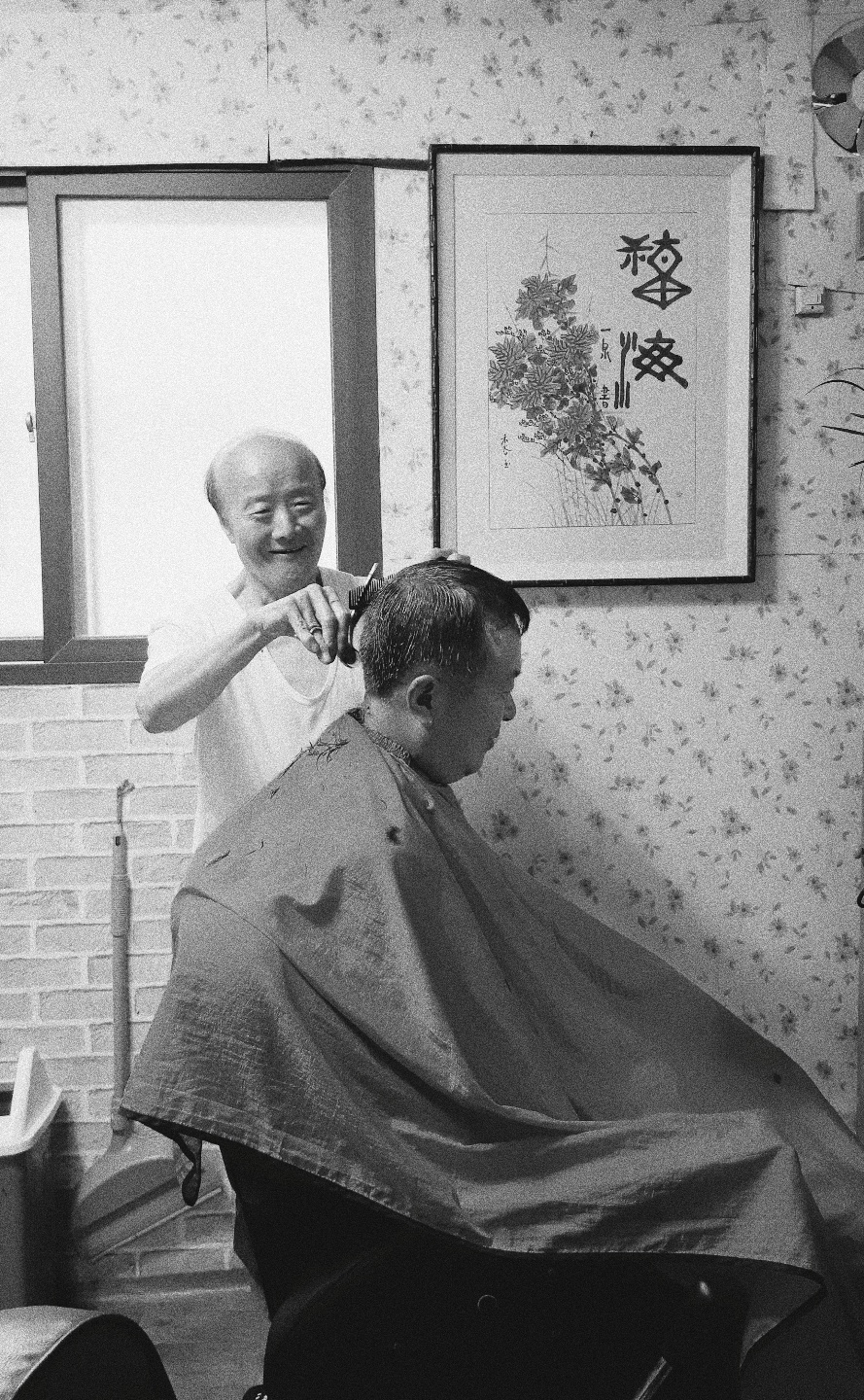
Background image OriginalForeground image Original
The two images above are the original images I worked with to create the final product below. Some of the functions that I used to create the final image are <scale image> <transform> <duplicate layer> <text> and <paths tool>.
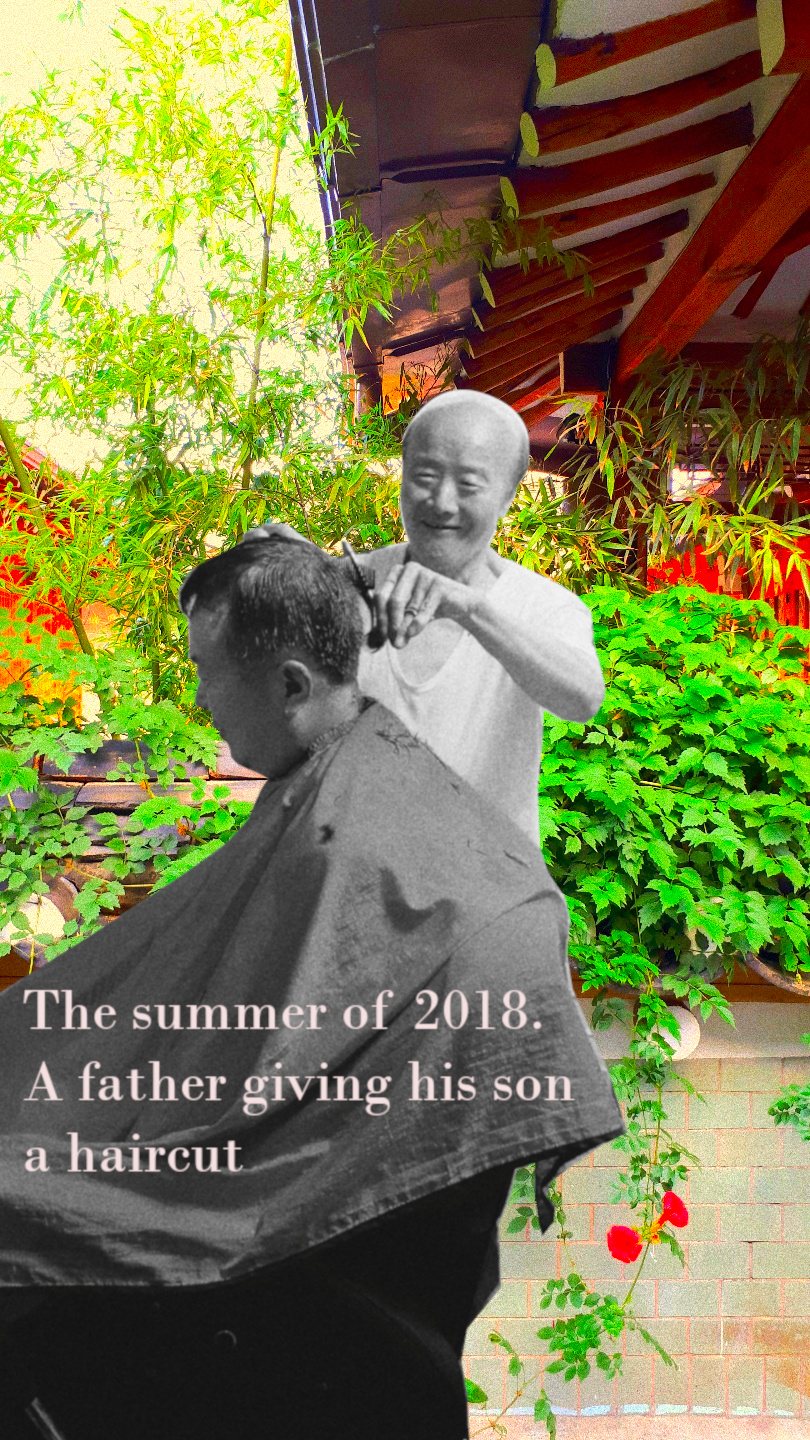
Final product using GIMP
The final image is a combination of the two original images and it has the foreground image flipped horizontally, with the two figures (my grandfather and my dad) cropped from the rest of the image. The background image has been saturated in colour and has been placed behind the foreground image. As the last edit, text has been placed on top of the foreground image to complete the project.
What is racial literacy and why is it important? – A dive into TEDWomen 2017 talk from two teenagers on a gap year
The TEDWomen 2017 talk on What it takes to be racially literate given by Priya Vulchi and Winona Guo provides a framework for the direction our education system should be headed towards in raising racially literate students.
The two teenagers raise the question of why is it that 12 years of schooling does not equip students to be racially literate by the time they graduate from high school. Priya and Winona argue that there are two big gaps in our racial literacy, which are the Heart gap and the Mind gap.
Heart gap is an inability to understand each of our experiences, to fiercely and unapologetically be compassionate beyond lip service. The mind gap is an inability to understand the larger, systemic ways in which racism operates.
The ideas grounded in heart gap argues for the need for our schools to teach about racism in contemporary contexts, not just re-visiting the historical figures and events of racism as something of the past, but taking a step further into making a connection to racism’s lasting legacy today. As Priya and Winona states, being racially literate dives much deeper than what is present at the surface level; it is to understand the human experiences of what is felt and lived at the individual level, by the lives of those affected by racism.
Yet, it is undeniable that we should not forget about the mind gap in racial literacy. We still need to pay attention to the statistics as well.
As argued by the two teenagers, our schools should invest in an education that values both the stories of the individuals and the statistics, the people and the numbers, and the interpersonal and the systemic.
To be racially literate, as Priya and Winona explain, means to have an understanding of who we are so that healing can start from our very own selves. When we have a better understanding of ourselves, we can work to bridge the gaps we have in our local communities which would then branch out.
Bridging the gap starts with open ears that listen to the stories and experiences of others around us.
Yoonsuh Lee is a second year student in the Kindergarten/Elementary Education Program at McGill University. As part of her program, she has recently taken a course named EDEC 262 Media, Technology and Education in her winter semester of her second year. Throughout the semester, she has engaged in learning of the various topics related to media and technology in education. As a pre-service teacher who recently discovered the importance of integrating media technology into the classroom, she hopes to apply what she has learned from this course into her teaching practices. As someone with passion in the Arts, Yoonsuh looks forward to making connection between the Arts and media technology in her future classroom.

 Yoonsuh's Media, Tech and Education